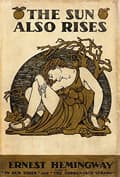
The Sun Also Rises
Ernest Hemingway
– WPM
– % ACC
0 / 19 Chapters
0 / 337 Pages
The Sun Also Rises is a 1926 novel by American writer Ernest Hemingway, his first, that portrays American and British expatriates who travel from Paris to the Festival of San Fermín in Pamplona to watch the running of the bulls and the bullfights. The novel is a roman à clef, the characters are based on people in Hemingway's circle and the action is based on events, particularly Hemingway's life in Paris in the 1920s and a trip to Spain in 1925 for the Pamplona festival and fishing in the Pyrenees. Hemingway presents his notion that the "Lost Generation", considered to have been decadent, dissolute and irretrievably damaged by World War I, was in fact resilient and strong. Hemingway investigates the themes of love and death, the revivifying power of nature and the concept of masculinity. His spare writing style, combined with his restrained use of description to convey characterizations and action, demonstrates his "Iceberg Theory" of writing.